
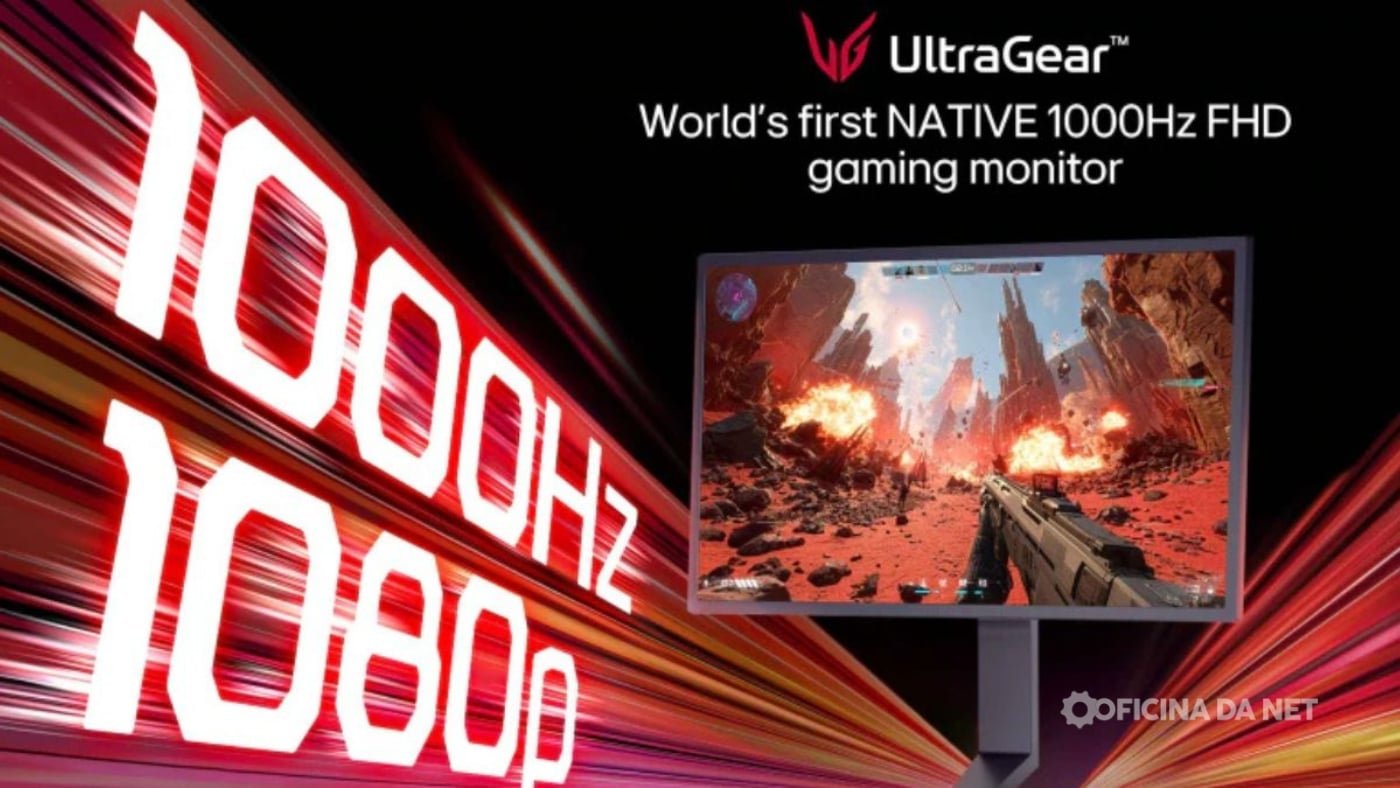

LG recently introduced the LG UltraGear 25G90B, the initial Full HD gaming monitor with a native refresh rate of 1,000 Hz. The price for this model has not been revealed yet, but it is expected to be available in the latter half of 2026. Despite its high-end capabilities, this monitor aims to cater specifically to competitive gamers and eSports enthusiasts.
What features are included in LG UltraGear 25G90B?
The monitor’s main feature is the pairing of Full HD resolution with a native refresh rate of 1,000 Hz, which was previously only seen in monitors with lower resolutions like 720p. LG’s latest model stands out by maintaining a 1,920 x 1,080 pixel resolution on a 24.5-inch screen.
Monitors ranging from 24 to 25 inches are popular in competitive gaming as they enable players to view the entire screen without needing to move their head. This is crucial in fast-paced games like Counter-Strike, Valorant, Overwatch, and Fortnite, where visibility is more essential than screen size or resolution.
The display utilizes an IPS panel, which is recognized for providing excellent viewing angles and consistent color reproduction. While the emphasis is not on film editing or visual immersion in this particular product, the primary objective is to minimize perceived delay and enhance the sharpness of movements in fast-paced scenes.
LG incorporated artificial intelligence features into the monitor, such as AI Scene Optimization for adjusting image settings based on the game genre, and AI Sound for enhancing audio spatial perception and communication clarity during matches when using a compatible headset.
The design features a sleek style, minimalistic foundation, adjustable lighting, and a built-in hook for headset storage. These are straightforward yet well-considered elements for competitive environments, where efficient desk arrangement, ergonomic considerations, and quick peripheral access are crucial.
Does the frequency in Hertz matter to everyone?
Launching a product with a 1,000 Hz display may be impressive, but not all users require such a high level of upgrade. Utilizing a screen with this refresh rate requires the computer to produce a significantly high number of frames per second. While this can be achievable in lighter or well-optimized competitive games with top-notch hardware, heavier titles with maximum graphics may not fully utilize the refresh rate.
Most people can easily distinguish between 60 Hz and 144 Hz. The difference remains noticeable up to 240 Hz, particularly in fast-paced games, but beyond 360 Hz or 500 Hz, the distinction is less discernible.
Basically, most cell phone screens are set at 60 Hz, but the contrast becomes more apparent when using a device with a 90 Hz refresh rate. However, the difference is less noticeable when moving to 120 Hz. Beyond that, such as with 144 Hz for gamers, the naked eye cannot distinguish between them when compared side by side.
The launch of the UltraGear 25G90B by LG highlights the direction the gaming market may take in the future, with advancements in GPUs and technologies potentially leading to higher refresh rates becoming more prevalent.
There is no cost associated with the launch.
The upcoming LG UltraGear 25G90B is set to be released in the latter half of 2026, but LG has not disclosed pricing, launch locations, or plans for Brazil yet. This lack of information is typical for such products, as they are usually unveiled as technological showcases initially, with commercial specifics following later.
Please provide the text that you would like me to paraphrase.

