
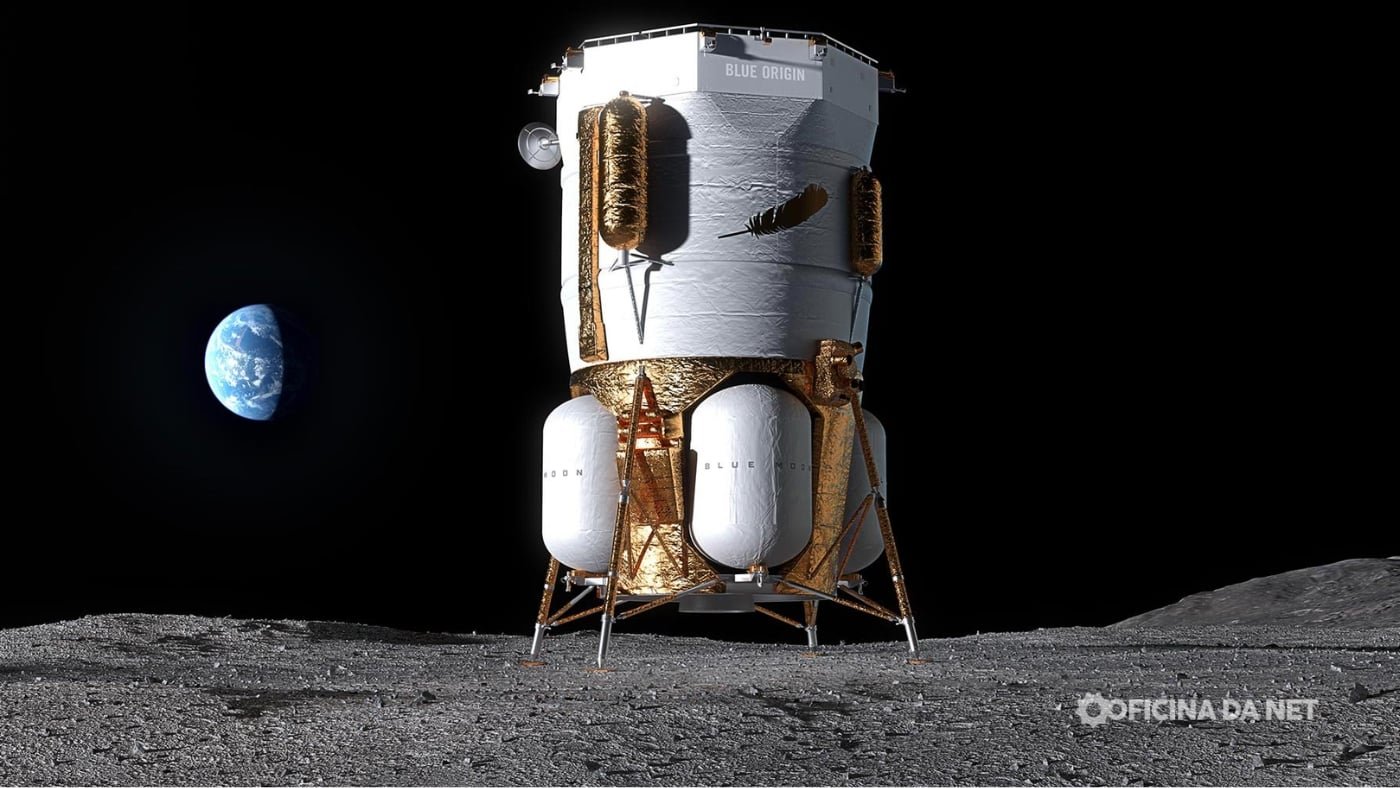

NASA has selected Blue Origin, Jeff Bezos’ space company, to head the initial unmanned lunar mission in the next phase of the Artemis program. The mission will deploy the Blue Moon Mark 1 module, known as Endurance, to transport payloads and gear to the Moon’s surface. Blue Origin secured a $188 million contract from Reuters to utilize its unmanned lunar module.
What are Blue Origin’s plans?
Blue Origin will transport payloads to the moon’s surface with the Blue Moon Mark 1, an unmanned module designed for carrying equipment, scientific tools, and infrastructure. The aim is to evaluate key technologies before conducting larger human missions.
The initial mission will not include any astronauts. It will be used to confirm the successful landing, navigation, communication, thermal control, propulsion systems, and cargo delivery in a lunar area that NASA views as important.
The probable location for landing is the south pole of the Moon, which is a significant area for scientific research and operations. It contains ice in shaded craters that could potentially be utilized to create water, oxygen, and fuel in the future. Adjacent regions also benefit from extended periods of sunlight, which is crucial for generating power.
NASA aims to establish a lasting presence on the moon by conducting regular missions and deploying various equipment and vehicles to support astronauts, test technologies, and prepare for future missions to Mars.
NASA must understand how to land heavy loads, drive vehicles on the moon’s surface, produce energy, manage communication, and address challenges such as dust, radiation, and extreme temperatures before sending astronauts for extended missions.
What does Blue Moon Mark 1 refer to?
Blue Moon Mark 1 is an autonomous lunar module by Blue Origin created for unmanned landings and delivering cargo, in contrast to the larger Blue Moon Mark 2 designed for future manned missions.
Mark 1 is required to function as a carrier for scientific payloads, rovers, communication tools, and infrastructure. Additionally, the mission aims to trial technologies essential for the advancement of the manned Blue Origin system.
The BE-7 engine, cryogenic propellants, accurate landing capability, and constant communication with Earth are crucial elements for advanced lunar missions and the logistical support of a Moon base.
Other agreements were also revealed.
NASA chose not only Blue Origin but also other companies to work on developing lunar vehicles and technologies. Astrolab was awarded a $219 million contract, and Lunar Outpost received $220 million for their surface lunar vehicle development efforts, as reported by Reuters.
Firefly Aerospace has been chosen for a mission named MoonFall, set for 2028, with the goal of moving small lunar drones from orbit to the surface.
Source 2

