
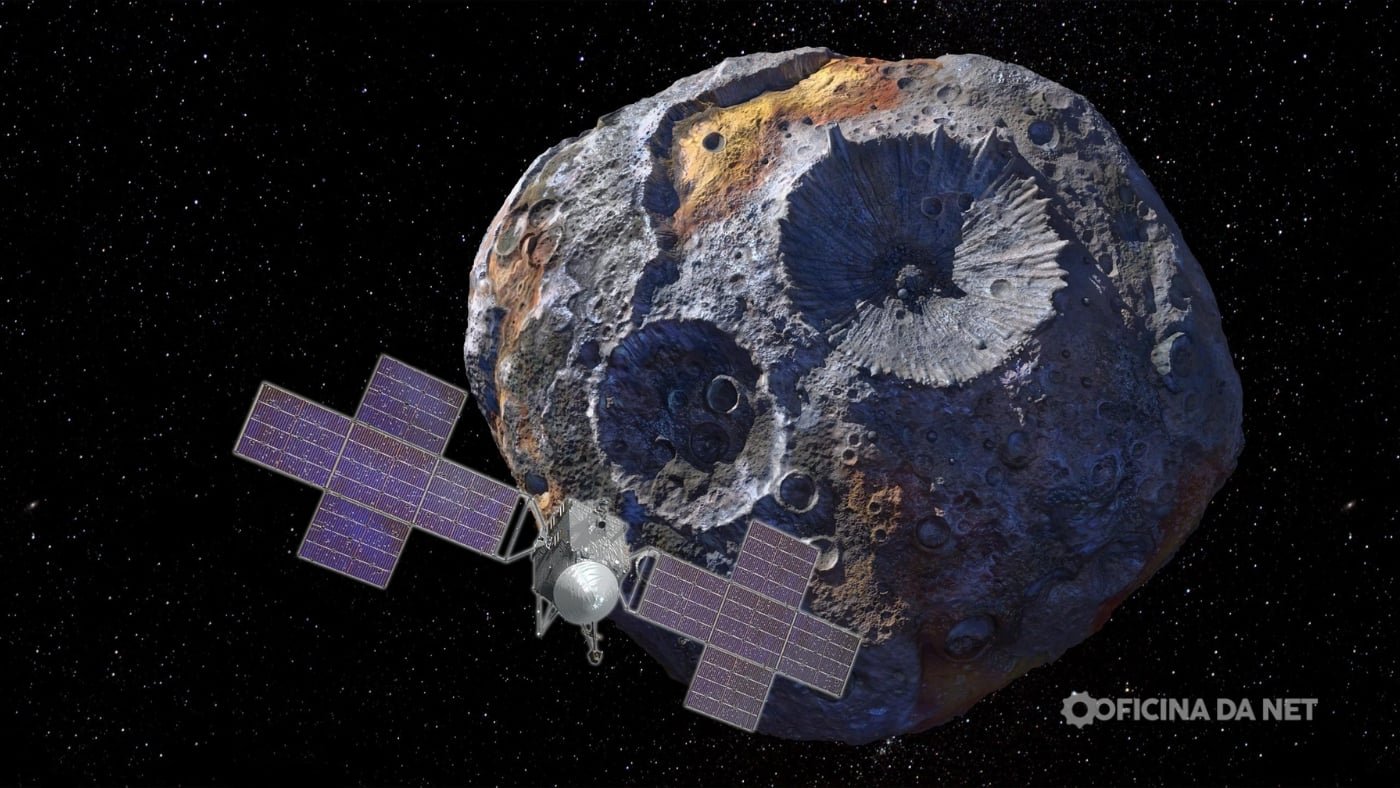

NASA’s Psyche mission recently reached a significant milestone by flying past Mars on May 15, 2026, to adjust its trajectory towards the metallic asteroid 16 Psyche in the asteroid belt between Mars and Jupiter.
The mission’s primary focus was on Mars during this phase, but it was not meant for an in-depth study of the planet. Instead, it involved a gravitational assistance maneuver, a standard practice in space missions to conserve fuel and adjust the spacecraft’s trajectory. The probe flew close to Mars at a speed of over 12,000 mph, passing approximately 2,800 miles or 4,500 km above the planet’s surface.
What actions did NASA take on the planet Mars?
The Mars flyby was used to boost the probe’s momentum by leveraging Martian gravity in a maneuver known as a gravitational slingshot.
The spacecraft utilized a portion of Mars’ orbital movement to increase its speed by about 2 km/s, which was crucial for the mission to progress efficiently without excessive resource consumption.
During the flyover, Psyche captured thousands of images of Mars, including images of the planet in different phases, details of the southern polar cap, wind trails near craters, and areas such as the Huygens crater. These photos are not only visually stunning but also help calibrate the instruments for the upcoming asteroid mission.

Where is the mission headed to next?
The probe will head to the asteroid 16 Psyche after exploring Mars, with plans to reach it in 2029 to conduct research on its composition, magnetic field, gravity, and surface.
The Psyche asteroid is unique as it may consist mainly of iron and nickel, typical components found in the cores of rocky planets. This suggests it could be the uncovered core of an ancient protoplanet, offering valuable insight into the formation of planets in the early stages of the Solar System.
The mission will orbit the asteroid for several months at various altitudes, conducting detailed measurements. The spacecraft will study the object for about 26 months, analyzing its gravity, magnetism, and composition before concluding the mission in 2031.
Information from Reuters and Space was utilized.

