
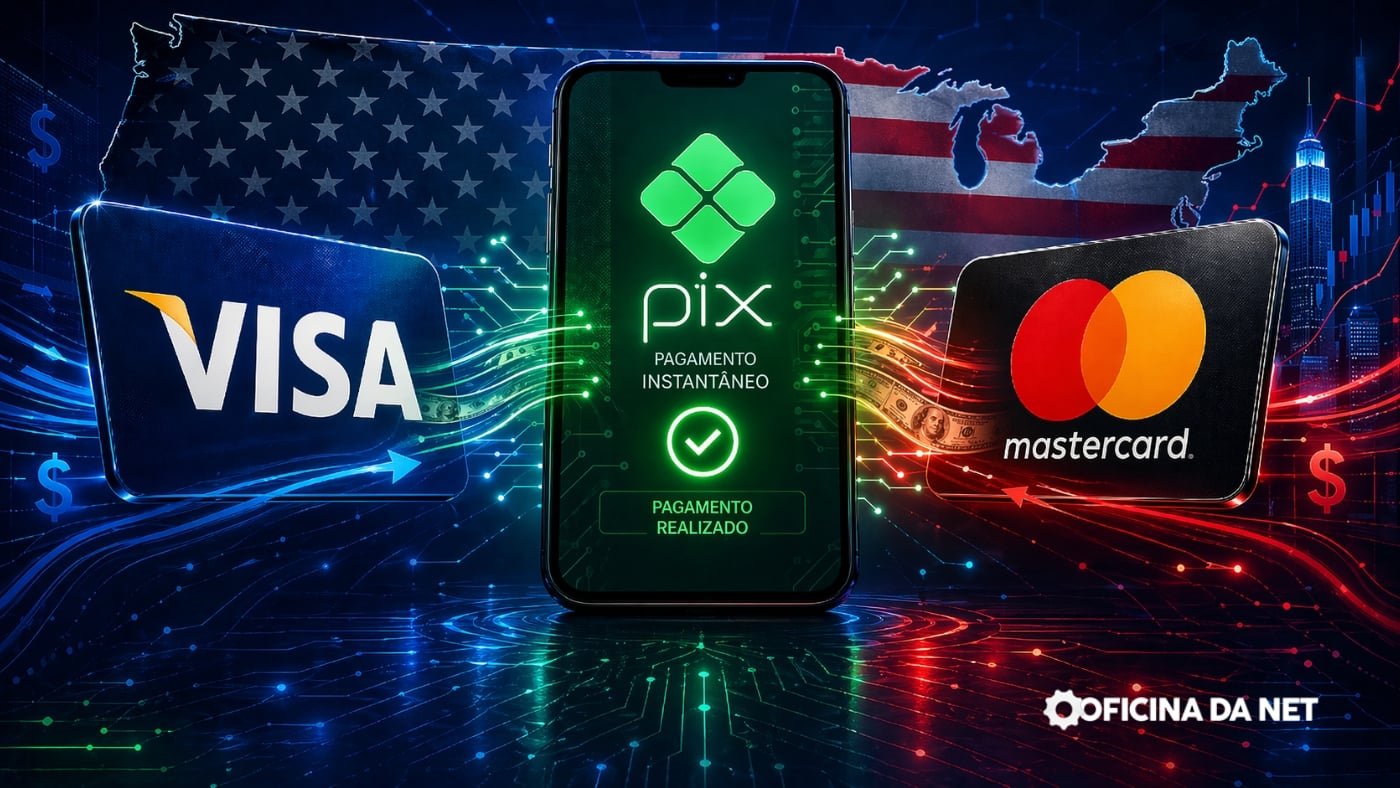

Pix transformed from a simple money transfer method to a significant financial infrastructure in Brazil, altering payment habits and attracting attention in the global payment market, leading to a trade conflict between Brazil and the United States.
The U.S. Trade Representative’s Office, referred to as USTR, initiated a probe into Brazilian trade practices under Section 301 of the American Trade Act. The investigation covers areas such as digital trade and online payment services, with a focus on Pix as a key concern.
What are the intentions of the United States regarding Pix?
The United States aims to assess if Brazilian policies negatively impact American companies operating in technology, social media, payment methods, and digital services. The USTR official report suggests that Brazil may be engaging in unjust practices in electronic payment services, such as showing preference for government-developed services.
The Brazilian system known as Pix is directly referenced when discussing government-developed electronic payments, even if the name Pix is not always mentioned on its own in all communications.
Brazil is in a unique position by establishing Pix under the Central Bank, providing a public instant payment system that rivals private solutions offered by major international companies like Visa and Mastercard.
Why is Pix so persistent?
Pix is highly regarded by major financial market participants for addressing a lucrative issue sought after by numerous private companies.
Much of digital transactions before Pix relied on various methods such as cards, machines, boletos, intermediaries, digital wallets, or traditional bank transfers, each with associated costs and fees.
Pix has provided Brazilians with an uncomplicated, immediate, and often cost-free option. People can now make money transfers at any time, even on weekends and holidays. Small businesses are now able to receive payments without depending solely on cards. Additionally, companies have managed to lower their operational expenses. Banks, fintechs, and payment providers have had to adjust to this new reality.
The Central Bank keeps current official data on transactions, transaction amounts, registered users, accounts, and institutions involved in Pix, indicating the system’s growth in the country.
Pix’s success led to it encroaching on areas previously dominated by private payment companies, creating some challenges.
Where do Visa and Mastercard fit into this narrative?
Visa and Mastercard play a central role in the card market by operating global networks that link issuers, acquirers, merchants, and consumers, gaining significance as more transactions are conducted through cards in the financial ecosystem.
When a customer uses Pix to pay a merchant, the transaction can occur independently of conventional card systems, showing a shift towards utilizing a domestic public payment network rather than solely relying on international card networks like Visa and Mastercard within Brazil.
The discussion in the United States should not be seen solely as criticism of a Brazilian technology. Brazil sees Pix as a means of promoting inclusion, efficiency, and financial modernization, while American market representatives believe that a government-regulated platform could give an advantage to domestic companies over foreign ones.
Can Pix be subject to taxes or abolished?
There are no concerns about Pix’s future. There is only an inquiry into trade practices allowed by Section 301 in the United States to determine fairness, discrimination, or harm to American trade.
If the USTR determines there are actionable practices, the US government can choose to implement commercial responses, such as tariffs or non-tariff measures.

Pix will not be taxed to Brazilian users, and the Central Bank will not be forced to shut down the system. The issue is mainly diplomatic, commercial, and regulatory and does not affect the normal operation of Pix for everyday users.
Why does the United States show interest in a Brazilian system?
Pix has evolved from a local solution to a globally recognized success story, demonstrating that a country can establish a public instant payment infrastructure integrated into the financial system, with widespread adoption and minimal costs for users.
This model can serve as a reference for other governments and may encourage the adoption of similar strategies in regions where American technology and payment firms aim to expand.
If other nations adopt Brazil’s approach, some of the worldwide digital payments market may shift from private platforms to locally regulated or public infrastructure, which represents a significant change for companies that rely on facilitating transactions.
What is Brazil’s statement?
Brazilian defense relies on three main points. Firstly, Pix does not restrict foreign companies from operating in the country. Banks, fintechs, and international companies are welcome to participate in the Brazilian financial ecosystem as long as they adhere to local regulations.
The system promoted competition by breaking down barriers for consumers, small business owners, and companies that used to rely on costlier or less efficient payment methods. Ultimately, users were left with just one more choice to consider.
The Central Bank serves as a financial system regulator and implementing a public payment infrastructure in Brazil would be a move towards economic modernization, not an unfair practice.
For the United States, there may be preferential treatment despite these arguments. In Brazil, Pix represents public innovation, financial inclusion, and technological independence.
What might occur at this moment?
The American inquiry does not resolve the situation overnight. The USTR initiated the investigation in July 2025, covering various topics like digital commerce, online payment services, tariffs, intellectual property, ethanol, and unlawful deforestation.
Pix is just one aspect of a broader conflict, as the Brazilian system stands out for its popularity, financial transactions, technological advancements, and impact on major corporations, but it is not the sole source of tension between Brazil and the United States.
In a milder situation, the inquiry leads to discussions and diplomatic changes. In a more severe situation, the US may leverage the situation to push Brazil on trade deals or take retaliatory actions in certain industries.
The top priority for Brazilian consumers currently is to recognize that Pix remains operational. The inquiry does not affect regular transfers, automatic payments, or service suspension.

